
You design the workflow, Otilus orchestrates the execution
Otilus scenarios translate the way you work into simple rules that automatically distribute tasks at every stage of a project.
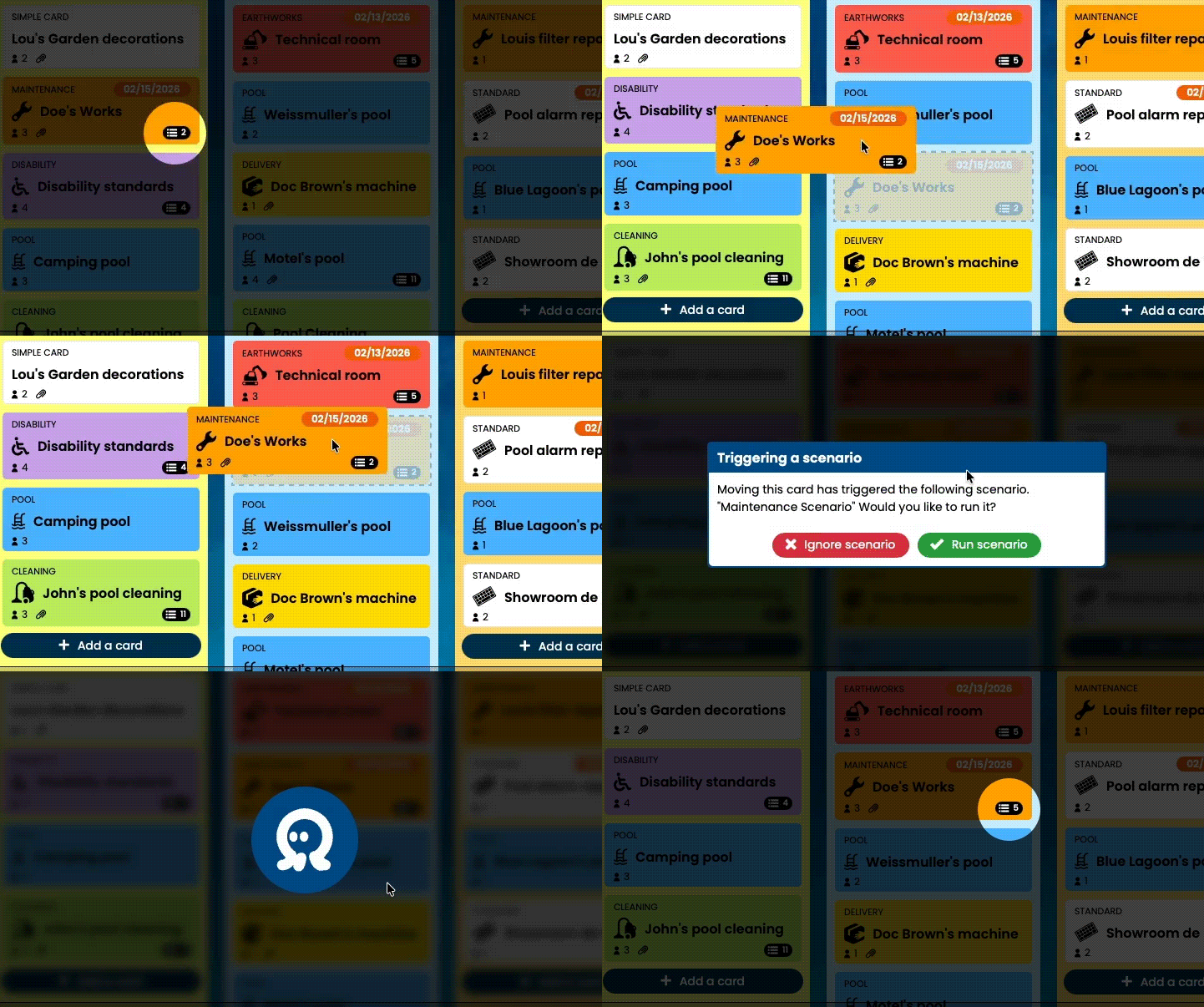
When your project management already knows what to do.
A scenario is a rule you define to automatically trigger tasks and direct the project to the right service depending on its progress.
- Scenarios generate expected tasks
Depending on the project type and the column it moves to, the scenario automatically creates tasks consistent with its stage of progress. - Scenarios move projects
When certain conditions are met, the project can be moved to another column in another board (or service), without manual intervention. - The method applies to the whole team
Scenarios prevent omissions, automate obvious sequences, and allow projects to progress coherently without constant supervision.
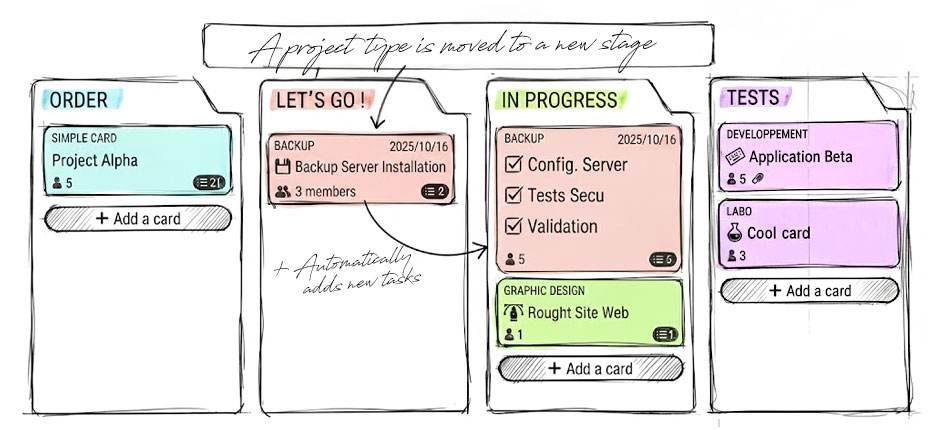
The scenario takes over your workflow logic.
Otilus scenarios apply your methods for you.
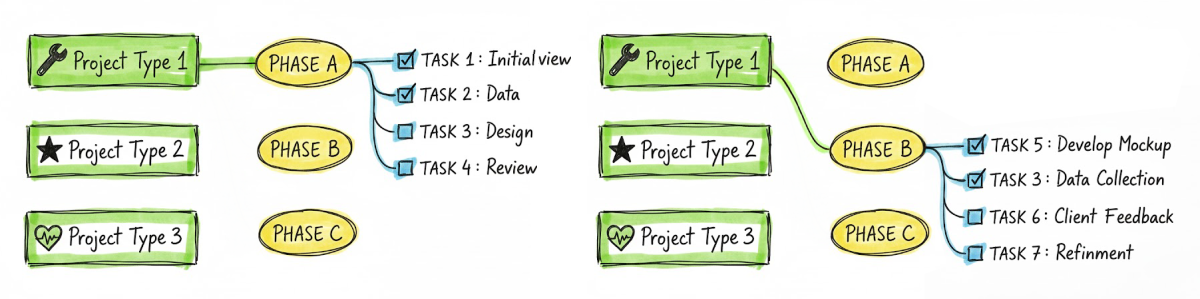
- For a card of type “Sandwich”, entering the “Purchasing” column makes tasks such as “Buy bread”, “Buy pickles”, etc. appear. Moving the card to “Prepare” automatically generates new tasks: “Slice the bread”, “Add a tomato”, etc. The logic then applies to every project of type “Sandwich”. Project types and scenarios are virtually infinite and adapt to all professions.
How does Otilus trigger the right tasks at the right time?
Create scenarios to define which tasks must be carried out depending on the project’s stage of progress.
Each time a card changes column, the tasks planned by the scenario appear automatically, consistent with the project stage. You design the scenario once, and Otilus applies it to all.
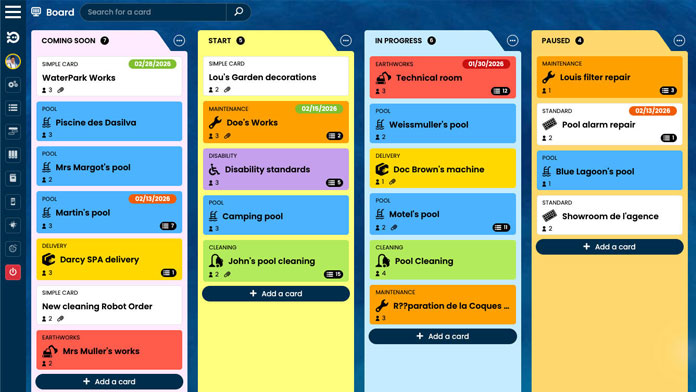
Metrics that complement scenarios
Data supports your decisions in Otilus and helps evaluate the effectiveness of your scenarios and team productivity.
Individual engagement, current priorities, project dynamics… each indicator offers a clear, actionable understanding of what truly works.
Scenarios for ADHD and ASD profiles
Accessibility is part of Otilus’ architecture. The interface offers a reading experience suited to people with ADHD, ASD, or certain visual impairments such as color blindness.
Scenarios reinforce this approach by acting as guides: they structure project steps, reduce uncertainty, and facilitate progress.
Science and automation that free the mind
Otilus relies on principles from cognitive psychology. Scenarios extend this logic by structuring actions and turning project steps into a readable journey.
The goal is simple: make understanding easier, accelerate decision-making, and reduce mental load.