
Project management and digital sovereignty
Choosing a project management tool is not just about choosing an interface. It also means deciding where your company’s most sensitive information will live.
Monday July 13, 2026
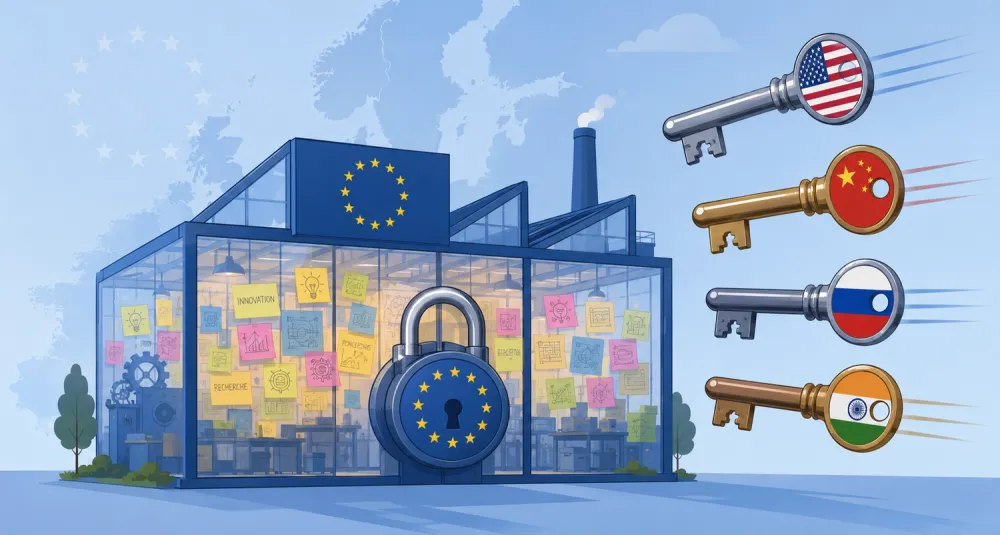
Many companies now use solutions such as Jira, Asana, Monday or Trello without always measuring what this involves. These tools are well known and often effective, but they belong to non-European ecosystems. Depending on the plans, settings and data residency options, the issue is therefore not limited to hosting: it also concerns the software provider, subcontractors, support, metadata, international transfers and the applicable legal framework.
Digital sovereignty is therefore not a technical detail. It is a choice of trust, security and control.
A project management tool contains strategic data
A project file may sometimes seem harmless. Yet within a company, it can reveal a great deal of information:
- the names of important clients or prospects;
- delivery deadlines;
- points of friction;
- documents linked to the innovation of a product;
- each team member’s responsibilities;
- commercial priorities;
- internal working methods;
- strategic decisions made as a team.
In other words, a project management tool does not only store tasks. It stores part of the company’s operational intelligence.
This is why a sovereign project management tool becomes an important choice for SMEs, manufacturers, agencies, consulting firms, local authorities and all organisations that handle sensitive information.
Cloud adoption has become massive in Europe
According to Eurostat, 52.7% of companies in the European Union used paid cloud services in 2025. This represents an increase of 7.4 points compared with 2023. The most common uses include email, office software, file storage, security software, finance, accounting and database hosting.
Cloud has therefore become the norm. Companies place their emails, files, CRMs, production tools, business software and project management tools there.
The issue is not using the cloud. The real question is knowing who controls the environment in which your data circulates.
Europe uses the cloud, but still depends heavily on non-European providers
According to Synergy Research Group, European providers account for only around 15% of the European cloud market. By contrast, Amazon, Microsoft and Google represent a very significant share of the regional market.
This figure illustrates a simple reality: European companies make extensive use of digital services, but they often remain dependent on major non-European platforms.
This dependence is not only economic. It can also raise questions of confidentiality, data control, reversibility and compliance.
Why do Jira, Asana, Monday or Trello raise questions?
Tools such as Jira, Asana, Monday or Trello can be attractive because they are well known, powerful or easy to adopt. But for a French or European company, using them should raise a few simple questions:
- where is the main data actually stored?
- what data remains outside the announced data residency scope?
- which subcontractors are involved in the technical chain?
- who can access the data in the event of support or maintenance?
- which legal framework applies to the software provider?
- what happens if the company wants to recover its data and switch tools?
This does not mean that these solutions are necessarily bad or unusable. Some offer data residency options, sometimes as part of specific plans. But for many SMEs, these issues remain unclear at the time of choosing a tool.
Yet the CNIL reminds organisations that data transfers outside the European Union and the European Economic Area must guarantee a sufficient and appropriate level of protection.
For a project management tool, this vigilance is essential. The data stored tells the real story of the company’s activity.
Digital sovereignty is not only about GDPR
Many companies believe the issue is settled because a tool displays a GDPR notice. In reality, GDPR is a foundation. Digital sovereignty goes further.
It raises a more strategic question: does your company truly retain control over its data, tools and digital dependencies?
A sovereign solution helps reduce several risks:
- legal risk, linked to data transfers and external regulatory frameworks;
- economic risk, linked to dependence on dominant providers;
- operational risk, when the company loses control of its own processes;
- confidentiality risk, when sensitive project information is scattered;
- lock-in risk, when it becomes difficult to change tools without losing time or data.
Digital sovereignty does not mean cutting yourself off from the world. It means choosing tools that are more consistent with the interests of the company, its clients and its teams.
A data breach can be very costly
Digital sovereignty should not be approached only from a political angle. It is also an economic issue.
According to IBM’s Cost of a Data Breach 2025 report, the global average cost of a data breach is estimated at 4.4 million dollars.
Of course, not all companies are exposed to the same level of risk. But this figure is a reminder of one thing: data has become a critical asset.
In an SME, a project information leak can already have very concrete consequences: loss of client trust, delivery delays, contractual disputes, exposure of a competitive advantage, internal disorganisation or damage to brand image.
Otilus: a French, European and more cost-effective solution
Otilus was designed as a clear, visual and sovereign project management tool. The goal is not only to provide a card-based board, but to allow teams to centralise projects, tasks, documents, deadlines, phases and responsibilities within a controlled environment.
Otilus is developed in France and hosted in France. Data remains within a French and European framework, allowing companies to make a choice that is more consistent with their confidentiality, compliance and digital independence challenges.
This sovereignty does not come at the expense of price. On the contrary, Otilus Team starts at €7.99 per user per month when billed annually, with essential features included: unlimited cards, unlimited tasks, Gantt chart, unlimited scenarios, push notifications, smartphone app, archives, task log export and calendar subscriptions.
By comparison, some international solutions operate with pricing tiers where advanced features, additional views, automations or administration controls are reserved for higher plans. Digital sovereignty therefore does not have to be a luxury. It can also become a simpler, clearer and more cost-effective choice.
Quick comparison
| Criterion | Common international tools | Otilus |
| Provider origin | Often non-European ecosystems | French and European solution |
| Data control | Depends on plans, options and subcontractors | Data hosted in France |
| Work readability | Often task-centred | A redesigned Kanban where cards represent projects |
| Automation | Varies depending on plans and built-in limits | Unlimited scenarios in the Team plan |
| Budget | Prices often increase according to advanced features | From €7.99 per user per month |
| Vision | Productivity and collaboration | Productivity, clarity, sovereignty and reduction of mental load |
Digital sovereignty is also a commercial argument
For a company, choosing a sovereign tool can also become a differentiating factor. When speaking to a client, partner or contracting authority, being able to explain that projects are managed in a French solution hosted in France can strengthen trust.
This is particularly true in sectors where data is sensitive: industry, consulting, healthcare, local authorities, training, construction, engineering, business services or wealth management.
Digital sovereignty is therefore not only a constraint. It can become proof of seriousness.
A sovereign tool must also remain simple
Sovereignty is not enough. A tool must also be easy to use every day.
With Otilus, each team member can know at any time where a project stands, which tasks are in progress, what is blocking progress and what the next steps are. This visibility helps reduce oversights, limit unnecessary meetings and better respond to clients, even when a project is not directly managed by the person being asked.
The interface is based on a clear visual logic: cards represent projects, columns represent progress phases, and tasks make it possible to detail the actions to be carried out.
This approach helps maintain an overall vision without drowning teams in an accumulation of scattered micro-tasks.
Conclusion: choosing your project management tool means choosing where the company’s memory goes
Digital sovereignty is no longer a topic reserved for large companies or public administrations. It concerns all organisations that want to retain control over their data, protect sensitive information and reduce their dependence on major non-European ecosystems.
In a project management tool, data is never neutral. It reveals what the company is preparing, what it sells, what it delivers, what is blocking progress and who is responsible for it.
By choosing Otilus, you choose a French and European solution, hosted in France, designed to structure work, reduce mental load and preserve control over your data.
Digital sovereignty is not a barrier to performance. It is a condition for building a clearer, more responsible and more sustainable organisation.