
Otilus vs ClickUp: Two Different Visions
ClickUp and Otilus address the same initial need: better organizing work, tracking projects and clarifying who does what. But the two tools are built on very different philosophies.
Monday July 20, 2026
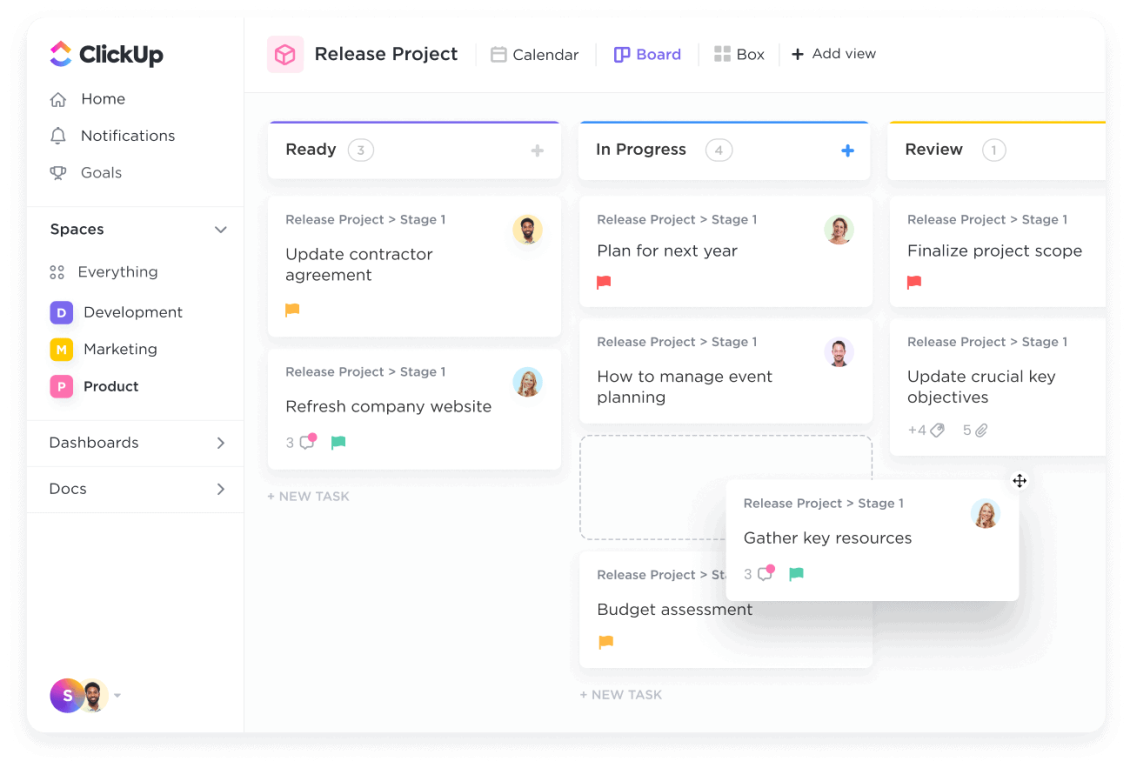
ClickUp presents itself as a highly comprehensive platform, capable of bringing together task management, documents, goals, chat, time tracking and multiple work views. It is powerful, but this level of richness can also require configuration, method and a real adoption effort.
Otilus, on the other hand, takes the opposite approach: focusing on what matters, making projects easier to read, reducing mental load and offering a clear, sovereign organization that teams can use quickly.
ClickUp: a highly comprehensive tool, sometimes too broad for some teams
ClickUp’s main strength is clear: the tool aims to replace several software solutions at once. On its website, ClickUp highlights more than 15 possible views, ready-to-use templates, boards, documents, chat, goals, dashboards and time tracking.
For a large team already used to complex tools, this can be very interesting. But for a very small business, an SME, a field team or a company that simply wants to structure its work without rebuilding everything, this abundance can become an obstacle.
Too many options can sometimes create a new question: do you really need to centralize everything in a single tool, or do you mainly need to make projects easier to follow?
Otilus: an approach focused on project clarity
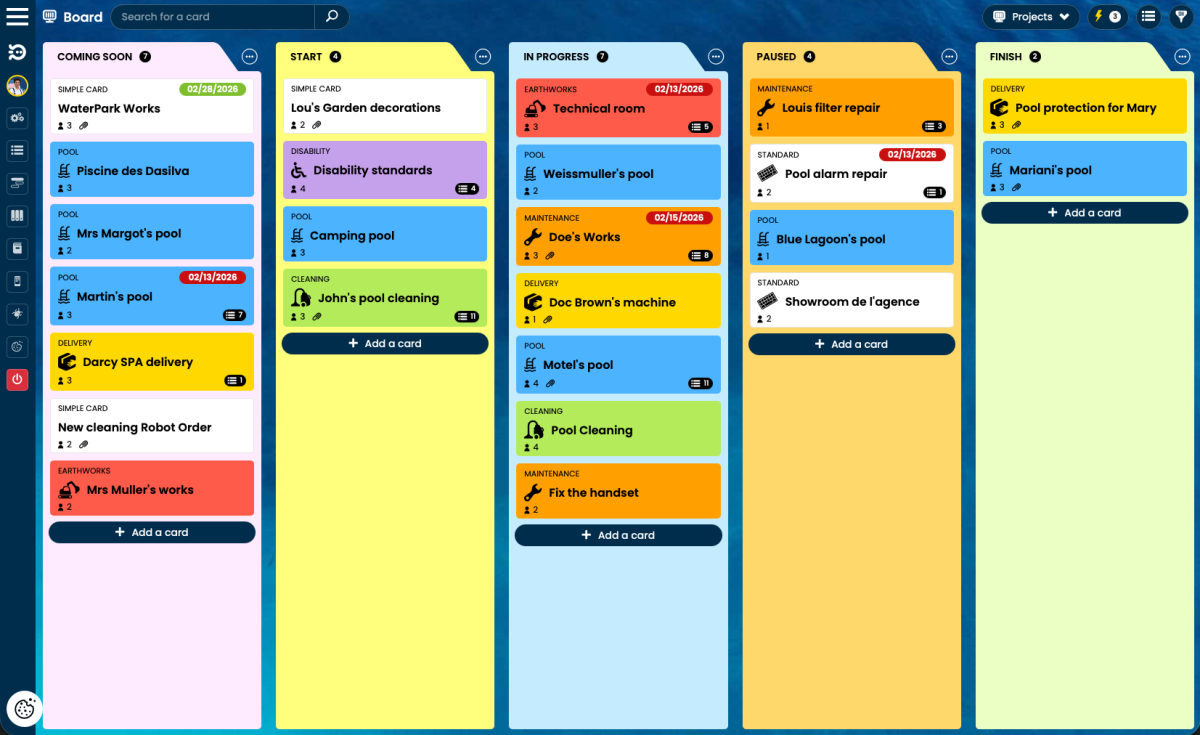
In Otilus, a card does not represent a simple task. It represents a project. This difference changes a lot in daily use.
Instead of multiplying cards for every micro-action, Otilus helps keep a global view of the project, while managing the tasks inside it. This logic is explained in more detail on the GTD and Eisenhower Matrix page, as well as through Otilus’s approach to rethinking Kanban.
As a result, boards remain easier to read, teams can better understand real progress and managers can stay in control without constantly having to schedule follow-up meetings.
Quick comparison between Otilus and ClickUp
| Criteria | ClickUp | Otilus |
| Philosophy | A highly comprehensive all-in-one platform | A clear, visual project management tool focused on action |
| Organization | Spaces, folders, lists, tasks and multiple views | Boards, phases, project cards and contextualized tasks |
| Ease of use | Powerful, but may require configuration | Designed to be quickly understood by the whole team |
| Automation | Advanced automations depending on the plan | Automatic scenarios linked to project types and phases |
| Priorities | Many views and filters | My Tasks view, GTD and Eisenhower built into daily use |
| Notifications | Numerous notifications depending on usage | Controlled notifications, designed to avoid overload |
| Sovereignty | International solution | French and European solution, hosted in France |
| Pricing | Plans starting at $7 per user per month, billed annually, then advanced options depending on needs, up to $28 per user per month. | Team plan at €7.99 including VAT per user per month, billed annually, with all features included. |
The question of data is becoming central
Choosing a project management tool is not just about the interface. It is also about data: clients, quotes, internal priorities, documents, deadlines, strategic decisions and team discussions.
According to Eurostat, 52.74% of companies in the European Union used paid cloud services in 2025. Among those using the cloud, 96.44% purchased at least one SaaS service. In other words, online software has become the norm.
This is exactly why digital sovereignty is becoming a key selection criterion. With Otilus, data remains hosted in France, within a European framework, with a clear ambition: to maintain control over the organization and sensitive information.
Price: be careful to compare what is actually used
ClickUp offers a free plan, then paid plans starting at $7 per user per month, billed annually, for the Unlimited plan, and $12 for the Business plan. ClickUp Brain AI is offered separately from $9 per user per month, while the Everything AI plan is listed at $28 per user per month.
Otilus offers a free plan for up to 2 users, then a Team plan at €7.99 including VAT per user per month, billed annually. This plan includes unlimited cards, unlimited tasks, Gantt chart, unlimited scenarios, archives, push notifications and calendar subscriptions.
So the real question is not only: which tool has the most features? The real question is: which features will the team actually use on a daily basis?
Otilus or ClickUp: which one should you choose?
ClickUp can be a good choice for an organization looking for a large all-in-one platform, with many views, many integrations, documents, chat, AI and a high level of customization.
Otilus is better suited to companies that want to structure their projects without making daily work more complex. It is especially relevant for very small businesses, SMEs, internal departments, sales teams, production teams, agencies, business owners and managers who want to:
- keep a clear view of ongoing projects;
- avoid boards overloaded with micro-tasks;
- reduce unnecessary follow-up meetings;
- automate recurring actions with scenarios;
- work with a sovereign, French and European tool;
- prioritize better without adding mental load.
In short, ClickUp aims to bring everything together. Otilus aims to make organization more readable, more manageable and more peaceful.
For a team looking for a very broad tool, ClickUp is worth considering. For a company that mainly wants to regain control over its projects, priorities and data, Otilus offers a simpler, more direct and more sovereign alternative.