
Project management for journalists and writers
Coordinate your research and track your stories while keeping publication deadlines in sight.
No credit card required
A tool to coordinate your editorial work
Keep a clear overview of stories in development, interviews to arrange and content due for publication. Journalists and writers often juggle several assignments, each with different sources, angles and deadlines. Otilus helps you assign tasks and track each story, from the initial pitch through to publication, keeping all the information you need in one place.
A news report is waiting for a witness to respond, an article needs editing before the print deadline, and an interview requires a final fact-check. Sources’ availability, late documents and changes requested by the editorial team can all hold up progress. A piece may look ready even though a quotation still needs confirming or evidence is missing to support an important claim.
In Otilus, each card represents a project : an article, an interview or a complete special feature. Columns show its stages. You can see which stories are being researched, which are moving into writing and which are awaiting a response. Card types distinguish the formats of your assignments, helping you find news reports or sponsored content when preparing your next editorial meeting.
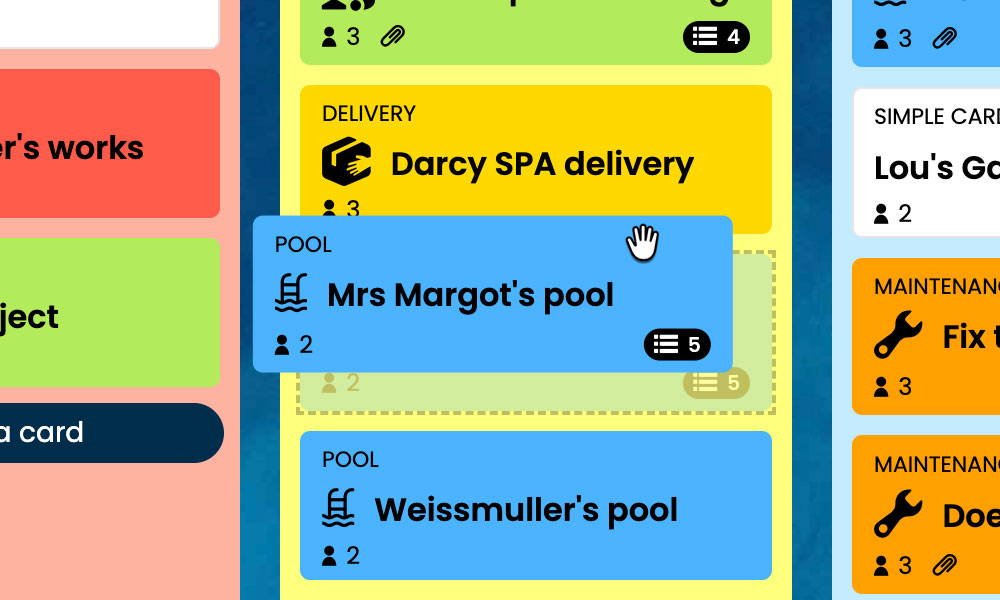
Kanban : See your stories and track their progress, from pitch to publication.
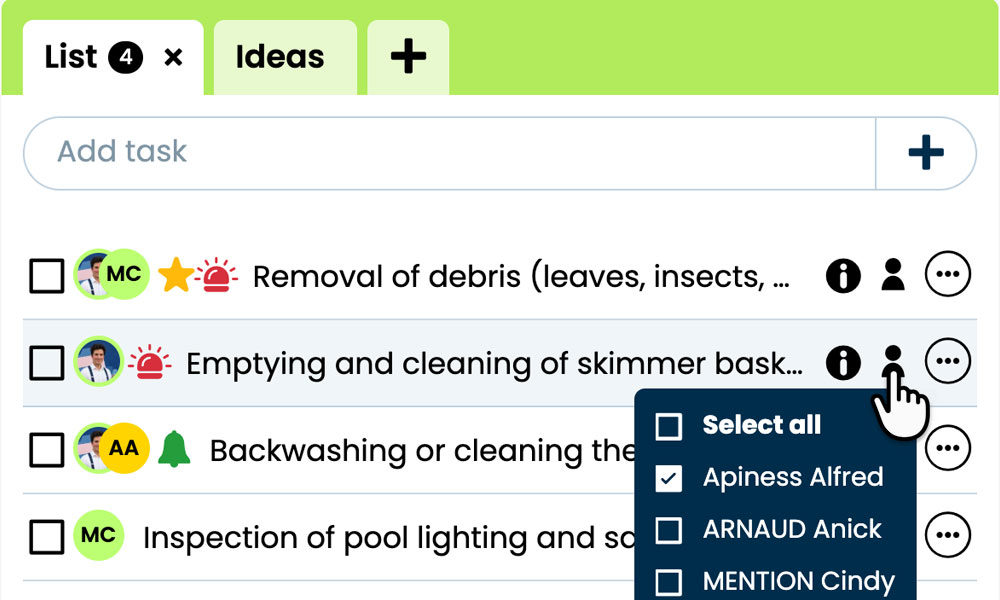
GTD : Organise each story’s tasks, notes and files to keep your information together.
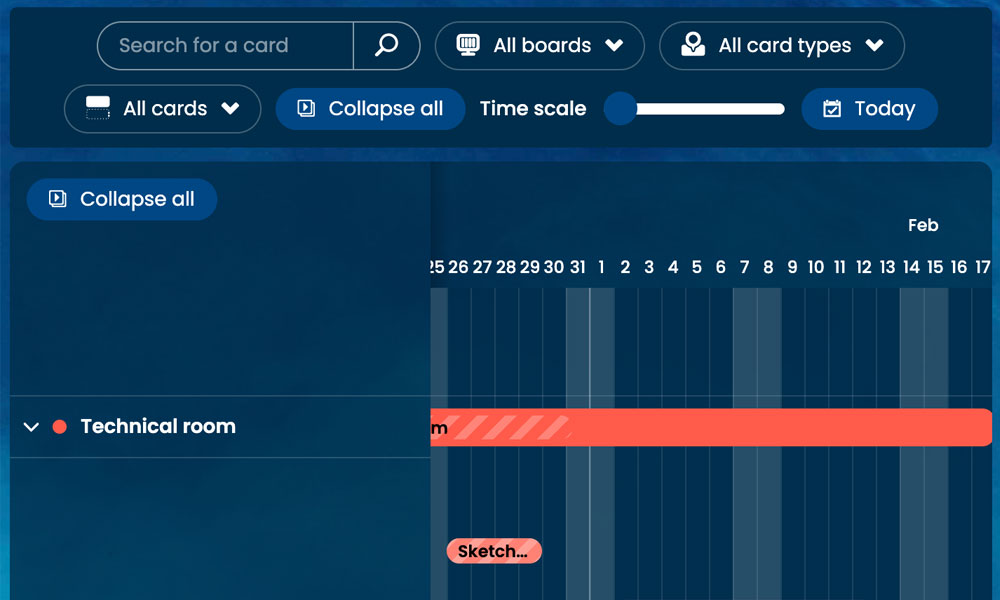
Gantt : Schedule editorial stages and publication deadlines on a timeline.
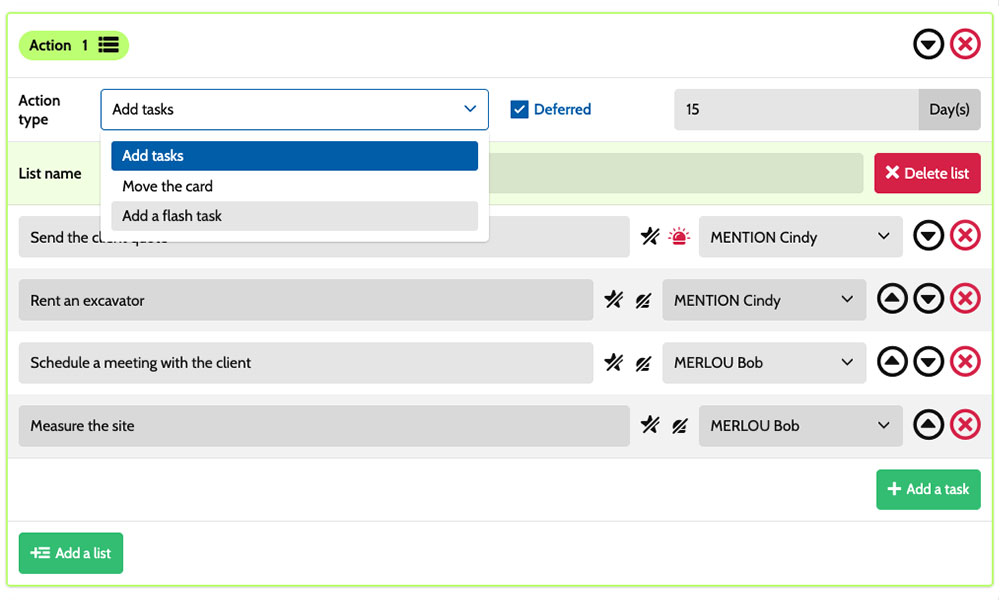
Workflow : Set up tasks with automation scenarios tailored to the way you work.
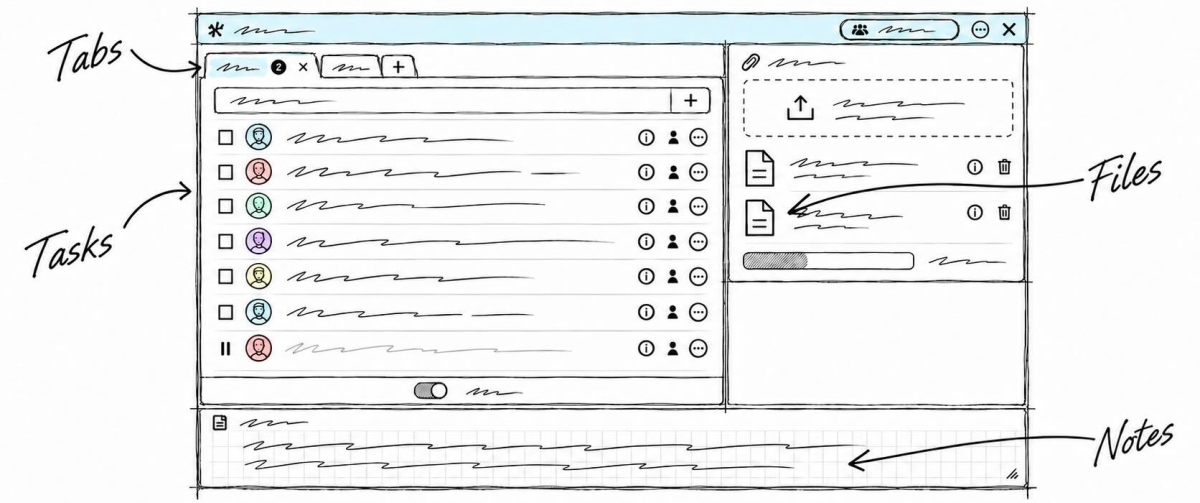
Inside each card, you break down the tasks :
contact a source, prepare questions, check a quotation or edit the text before publication. Task assignments make it clear who is responsible, while priorities help distinguish an urgent fact-check from additional research. Notes and attachments bring together editorial briefs, source documents and other material relevant to the story. You have a shared space to coordinate journalists, writers and editors while keeping track of the specific requirements of each assignment.
An example board for tracking your stories
Here is an example of a customisable setup for a team producing articles, interviews and news reports. Each card represents a complete story, with its tasks and deadlines. The five columns provide an overview of progress, while the six card types distinguish editorial formats. You can adapt their names to your organisation, your editorial review process and the publication requirements of each assignment.
Stages that match the way you work
The Story/Pitch, Research/Interviews, Writing and Publication columns show the active stages in this customisable example. The On hold column keeps paused stories visible while you wait for a source, a document or an editorial decision before continuing.
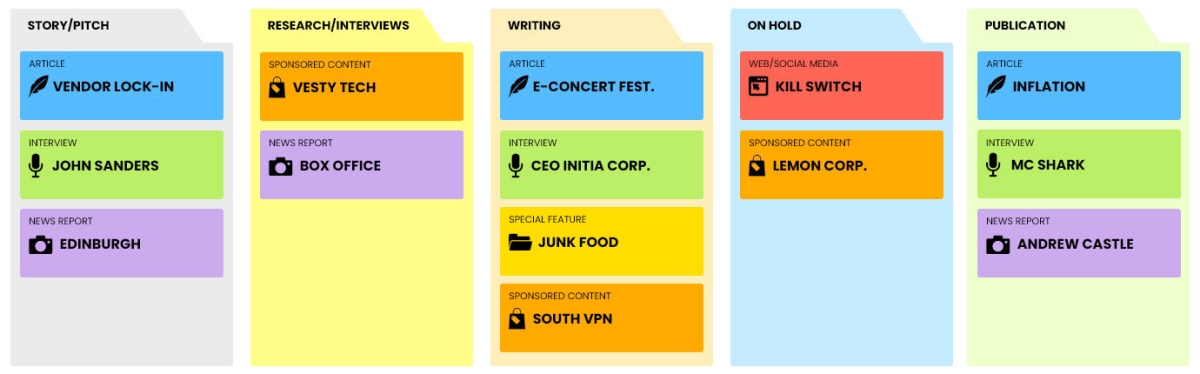
Some examples of project types: define your own!
- Article : a journalistic piece covering a specific subject from a defined angle.
- Special feature : a collection of complementary pieces exploring a single theme.
- Interview : An interview focusing on a person’s background or views.
- News report : reporting based on observations, interviews and supporting evidence.
- Web/Social media : content intended for websites and social media channels.
- Sponsored content : commissioned content created to meet a specific objective.
Scenarios and workflow:
customise your project automation
1️⃣ The trigger
An article about local shops starts in Story/Pitch, then moves to Research/Interviews. After conducting interviews and gathering documents, the journalist moves the card to Writing to start drafting the piece for the newspaper.
You can configure a scenario for the Article card type when it enters the Writing column. This combination triggers the creation of the tasks you have defined in Otilus. You choose the actions and the people responsible to match your editorial process; the software does not check whether interviews have taken place or detect approval from your editorial team.
2️⃣ The actions (workflow)
Otilus automatically creates the tasks defined in the scenario:
- develop a detailed outline
- write the article about local shops
- check the shopkeepers’ quotations
- edit the article and suggest a headline for publication.
These tasks are assigned to the team members you choose:
the journalist handles the outline and draft, while the copy editor checks quotations and edits the text. You customise the scenario’s tasks, assignments and priorities.
3️⃣ The result
The article moves into writing with clearly defined tasks and responsibilities. Each contributor can find their tasks, interview notes and available documents, then tick off completed actions.
The editor can see which checks remain and track the work needed before the article is published.
The team retains control over editing and editorial decisions. Once the checks are complete, the journalist manually moves the card to Publication. If a source is slow to confirm a quotation, they move the story to On hold to make the delay visible on the shared board.
An approach suited to editorial professionals
This board can also suit freelance journalists, copy editors, web content writers, editorial communications teams and documentary writers. These professionals all work with story ideas, information gathering, review rounds and deadline-driven delivery. Card types can reflect their usual formats, depending on their assignments and audiences. Stages can be adjusted to match their editorial processes, sources’ availability and the distribution channels chosen for the content they produce.
Organise your stories, interviews and publications on a board tailored to your editorial work.
No credit card required