
FAQ: Everything You Need to Know About Otilus
Learn all about our project management software, its features, pricing, security, and how to use it as a team.
Otilus is a French project management software solution designed to centralise project tracking, organise tasks, manage priorities and make teamwork easier. With its Kanban boards, Gantt chart, automations and tracking tools, Otilus helps businesses manage their projects and processes every day.
This FAQ answers the main questions about how Otilus works, its features, pricing, data security, hosting in France and the differences between Otilus and other project management tools.

Discover Otilus | Features | Using Otilus every day | Otilus compared with other tools | Data & security | Accessibility & pricing
Discover Otilus
What is Otilus?
Otilus is a French project management and teamwork software solution that lets you manage multiple projects, organise tasks, prioritise work and automate processes. It brings together Kanban boards, a Gantt chart, the GTD and Eisenhower methods, documents, notifications and automations in a single environment.
Is Otilus project management or task management software?
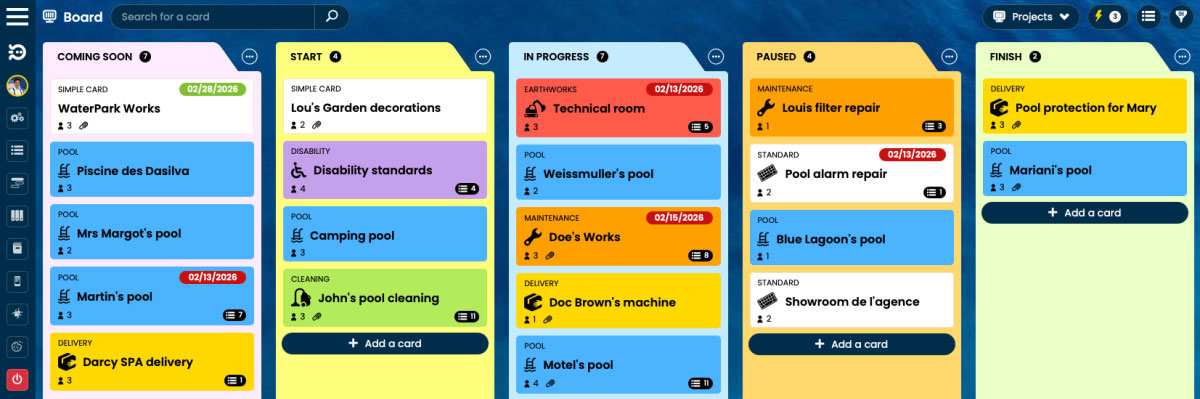
Both! Unlike a basic task manager, it lets you track complete projects, including their phases, tasks, priorities, deadlines, documents and contributors. This means that tasks always remain linked to the project they belong to. Discover Otilus Task Management.

Who is Otilus for?
Otilus is designed for freelancers, business owners, managers, micro-businesses, SMEs and teams within large organisations that want to organise their projects and tasks more effectively. It can be used individually or by a team, regardless of the organisation’s size, to centralise work, assign responsibilities and track project progress.
Is Otilus suitable for micro-businesses and SMEs?
Yes! Otilus is particularly well suited to micro-businesses and SMEs that want to structure their projects, centralise information and assign responsibilities more effectively. It can also adapt to the needs of large organisations thanks to its team management features, team manager role and multilingual interface, which is especially useful for organisations operating across several sites or countries.
What is the difference between Otilus and a traditional Kanban board?
On a traditional Kanban board, a card usually represents a task. In Otilus, each card represents a project, while the columns correspond to the different phases of its progress. Tasks, documents, notes and deadlines remain grouped within the project, making it easier to track several projects at the same time. Discover the difference between a traditional Kanban board and a project-based Kanban board.
Can I manage multiple projects at the same time with Otilus?
Yes, this is one of Otilus’s core principles. Its project-based Kanban board lets you view numerous projects simultaneously, identify their current phase and access each project’s priority tasks. The aim is to maintain an overview, even when several projects are progressing at the same time.
Try Otilus for freeDiscover Otilus Offer
No credit card required
Features
Can I create a Gantt chart with Otilus?
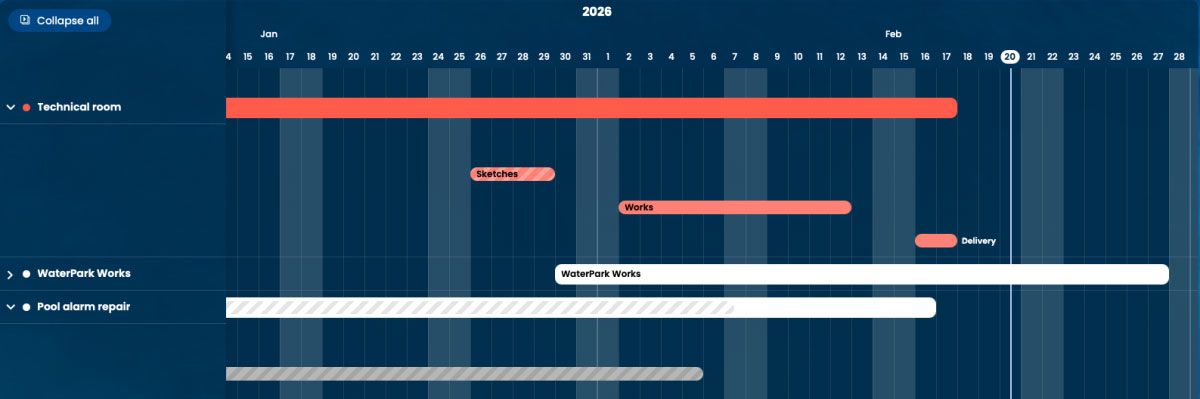
Yes! Otilus includes a Gantt chart built from your project phases and deadlines. It lets you visualise progress over time, anticipate critical periods and share a clear view of the schedule with your team or clients.
Can I manage tasks for several team members?
Yes! Tasks can be assigned to different team members directly within each project. Everyone can see their own priorities, while managers have a broader view of activity and how work is distributed across their team.
How does the Eisenhower matrix work in Otilus?
Otilus directly incorporates the principles of the Eisenhower matrix. Each task can be classified according to its level of urgency and importance, making it easy to identify what should be done first, scheduled, delegated or postponed.

Can I automate tasks and workflows?
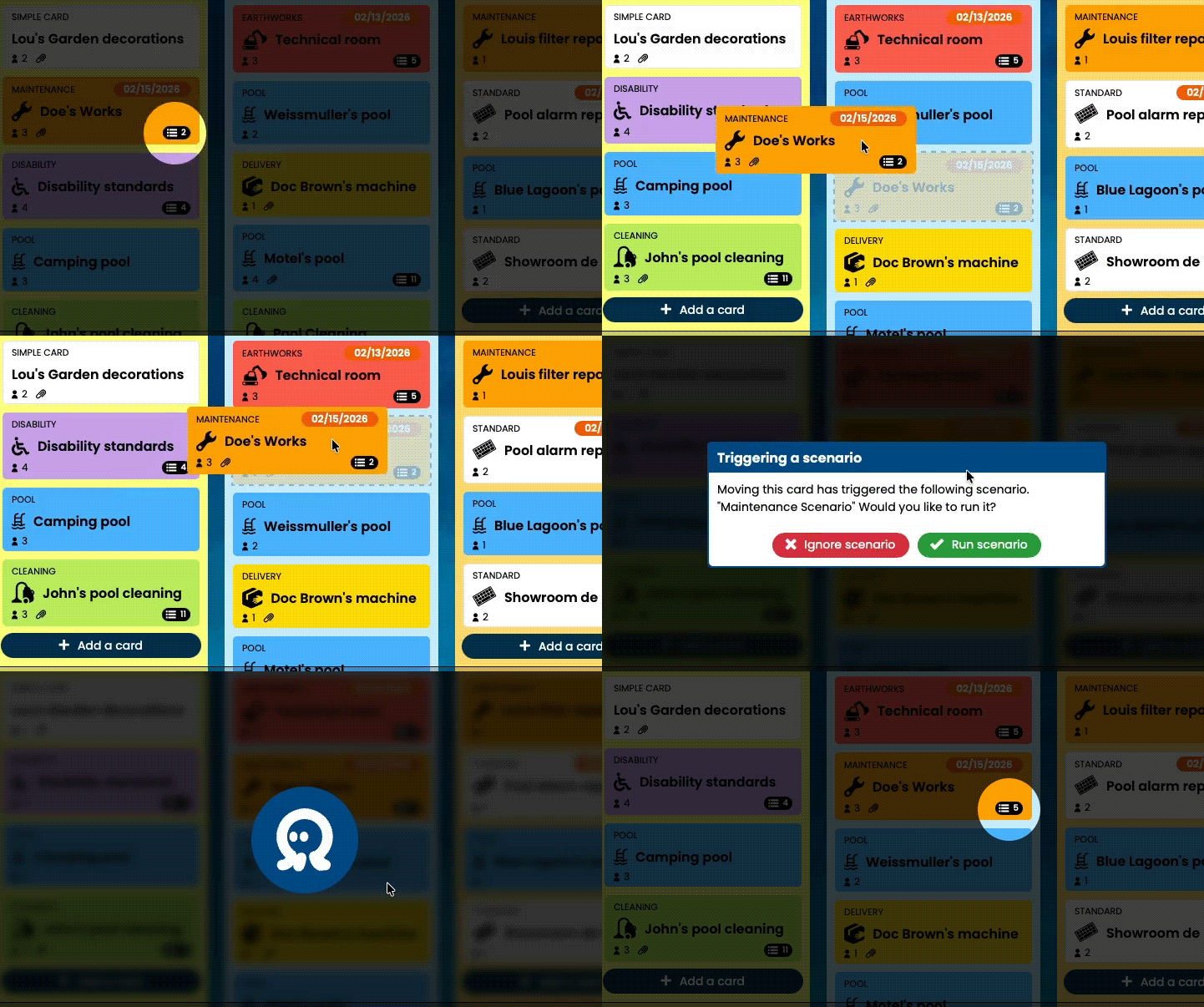
Yes! With automation scenarios, Otilus can trigger actions based on the type of project or its current phase: creating tasks, assigning them to a team member, adding elements or preparing the next step. Automation helps make recurring processes more reliable and reduces the risk of anything being overlooked.
Can I create my own workflows?
Yes! Otilus lets you build custom workflows that reflect how your business actually operates. Boards, phases, project types and scenarios can be configured to reproduce your business processes and automate certain actions at each stage.
Can you schedule delayed actions within a scenario?
Yes! Otilus scenarios can trigger actions immediately or after a specified delay in days. For example, when a project enters a validation phase, a follow-up task can be automatically created and assigned seven days later. This lets you plan upcoming actions without having to recreate each one manually. Discover scenarios and delayed actions.
Can I add documents, notes and attachments to a project?
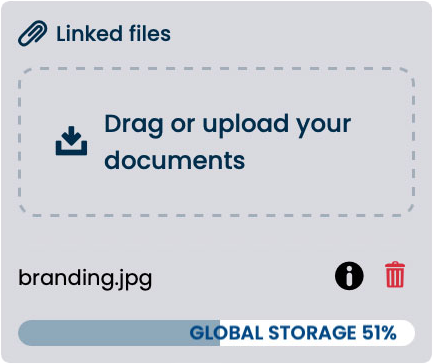
Yes! Each Otilus project can store its documents, notes and attachments directly in the corresponding card. Information remains centralised alongside the project’s tasks, deadlines and discussions, so files are not scattered across several tools.
Can you see who did what in Otilus?
Yes! The activity log centralizes the main events across your projects: card creation and movement, task updates, deadline changes, and document uploads. Each event shows who performed the action and when. Filters allow you to find information by board, project, team member, action, or time period. Access is restricted to managers and administrators, based on their respective visibility permissions.
Can Otilus help monitor a team's workload?
Yes! Otilus provides a clear overview of task distribution, priorities, and project progress, helping managers better assess each team member's workload. The activity log complements this overview by allowing managers and administrators to track key actions, see who performed them, and when. This information makes it easier to monitor team activity, identify workload imbalances, and distribute work more effectively.
Can I archive a project and access its history in Otilus?
Yes! Otilus allows you to archive completed projects without losing their history. Archived cards retain their phases, tasks, notes, and completed actions while freeing up space on active boards. They remain accessible, can be found using filters, and can be unarchived whenever necessary. Archives are retained for 5 years. The task log can also be exported to keep an independent copy of the project. Please note that attachments must be exported before archiving, as they are not retained in the archives.
Try Otilus for freeDiscover Otilus Offer
No credit card required
Using Otilus every day
Does Otilus work on smartphones and tablets?
Yes! Otilus is available on computers, smartphones and tablets. Its interface adapts to mobile use, allowing you to view projects, manage tasks and track their progress both in the office and out in the field.

Do I need to install software to use Otilus?
No! Otilus works directly in a web browser, with no software to install. It can also be installed as a web app on a computer, smartphone or tablet, giving you direct access to your projects.
Can several people work on the same project?
Yes! Otilus is designed for collaborative work. Several team members can contribute to the same project, be assigned tasks and track its progress. Everyone knows what they need to do, while the manager retains an overview of the project and the team.
Can I customise my boards and project types?
Yes! Otilus lets you customise boards, phases and project types to reflect your company’s organisation and processes. Each board can have its own team members, card types and automation scenarios.
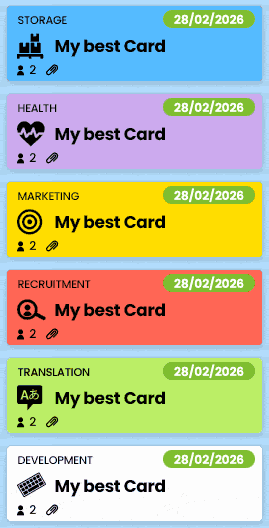
How does Otilus help reduce meetings and mental load?
Otilus centralises projects, tasks, priorities, deadlines and responsibilities in a shared workspace. Everyone can see how projects are progressing and what they need to do, reducing the need for meetings devoted solely to status updates. Its visual organisation, prioritisation tools and automations also reduce the amount of information people need to remember and therefore help ease mental load. Discover how Otilus helps reduce mental load.
Question: Which languages is Otilus available in?
🇫🇷 🇬🇧 Otilus is available in French and English to facilitate collaboration among international teams. Each user can individually choose their interface language from their account settings, without affecting the language preferences of their colleagues. This allows teams of different nationalities to work together on the same projects, each in their preferred language.
Try Otilus for freeDiscover Otilus Offer
No credit card required
Otilus compared with other solutions
Is Otilus a French alternative to Trello?
Yes! Otilus is a French alternative to Trello that offers the visual power of Kanban with a different approach: in Otilus, each card represents a project rather than a single task. Gantt charts, Eisenhower priorities, tasks, documents and automations are built in, with data hosted in France. Compare Otilus and Trello.
Can Otilus replace Microsoft Planner or Microsoft To Do?
Yes! Microsoft To Do is mainly focused on task management, while Microsoft Planner helps teams organise their work. Otilus goes further by bringing project management, collaborative tasks, priorities, Kanban boards, Gantt charts and automations together in one French solution.
How does Otilus differ from solutions such as Monday, ClickUp or Asana?
Otilus prioritises project clarity, priorities and team autonomy. While platforms such as Monday, ClickUp and Asana offer a very wide range of configuration options, Otilus naturally structures work around projects, their phases and the actions to be completed, with particular attention paid to mental load and data sovereignty. Compare Otilus and ClickUp or read our project management software comparison.
Can I switch to Otilus from another project management tool?
Yes, you can adopt Otilus gradually by recreating your boards, phases, project types and workflows to reflect your company’s organisation. A team can begin with a few projects or one department before rolling it out more widely, without immediately disrupting all its existing working methods.
Try Otilus for freeDiscover Otilus Offer
No credit card required
Data, hosting and security
Where is Otilus data hosted?
Otilus business data is hosted in France, in the Paris region, and remains physically stored within France. This choice is part of our commitment to French and European digital sovereignty, ensuring that business data remains within a European legal framework. Learn more about Otilus and digital sovereignty.
Is Otilus GDPR compliant?
Yes! Otilus operates in accordance with the General Data Protection Regulation (GDPR). Developed and hosted in France, Otilus takes a European 🇪🇺 approach to data management and limits its use of non-European third-party services. Discover our approach to data sovereignty.
How does Otilus protect my company’s data?
Otilus protects your business data through secure HTTPS connections, bcrypt password hashing, protected access, data isolation between companies and daily off-site backups. Business data is hosted in France by Celeonet, an ISO 27001-certified hosting provider. Discover Otilus security.
Try Otilus for freeDiscover Otilus Offer
No credit card required
Accessibility and pricing
How much does Otilus cost?
Otilus offers a free plan, followed by a Team plan starting at €7.99 including VAT per user per month when billed annually, or €9.99 when billed monthly. The Team plan includes unlimited projects and tasks, Gantt charts, scenarios, notifications, archives and the installable web app for smartphones and tablets.
Can I use Otilus for free?
Yes! The Beginner plan is free for up to two users and lets you discover Otilus with one board, up to 15 projects, 100 tasks, the Gantt chart, one scenario and the installable web app for smartphones and tablets.
Is Otilus suitable for people with different disabilities?
Otilus was designed to provide a more comfortable experience for users with a variety of needs, particularly people with ADHD, autism spectrum disorder or certain visual impairments such as colour blindness. Its structured interface, visual cues and focus on cognitive load make information easier to understand and work easier to organise. Discover Otilus’s inclusive approach.
Try Otilus for freeDiscover Otilus Offer
No credit card required