
Project management for R&D and innovation teams
Coordinate your research and testing to take your ideas through to deployment.
No credit card required
A tool for your research and innovation projects
Keep a clear overview of your research, upcoming tests and development work to prepare. In an R&D and innovation team, you need to explore several avenues without losing track of your findings or letting a single uncertainty hold up every project. Otilus helps you organise this work, from the initial idea through to the deployment of a product, service or new process.
A prototype is awaiting strength testing, a service needs to be tested with users, and a material requires further technical measurements. Between hypotheses to test, results shared by the laboratory and decisions about available resources, bottlenecks build up. A project may seem ready to move forward while still missing an essential piece of data or a technical assessment.
In Otilus, each card represents a project: an experimental product, a service or an improved process. Columns show its phases. You can see which projects are in research, which are moving into development and which are on hold. Card types distinguish your innovation categories, helping you find materials or digital tool projects when preparing a meeting with your team.
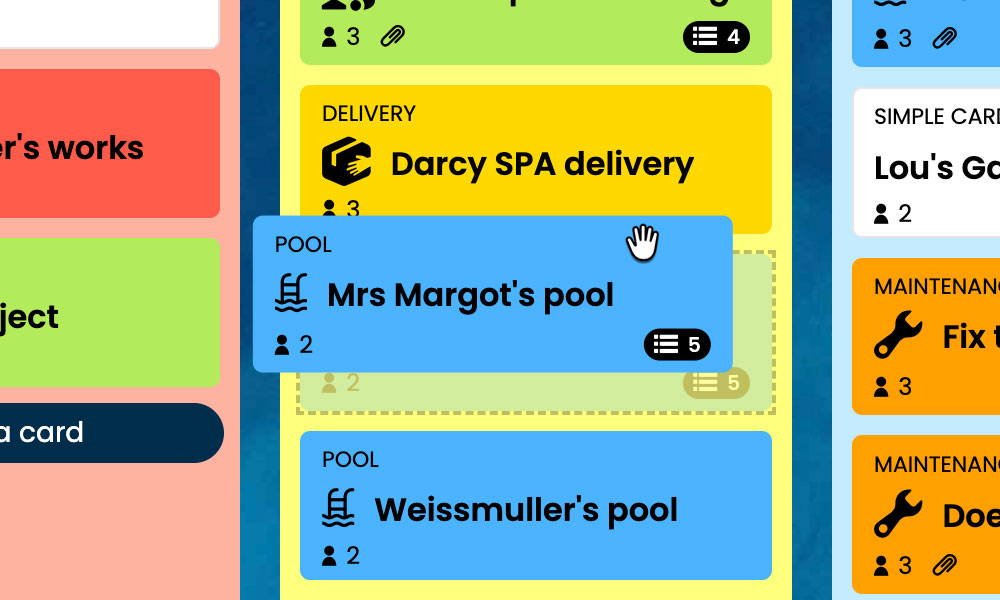
Kanban: Visualise your innovation projects and their progress, from ideas through to deployment.
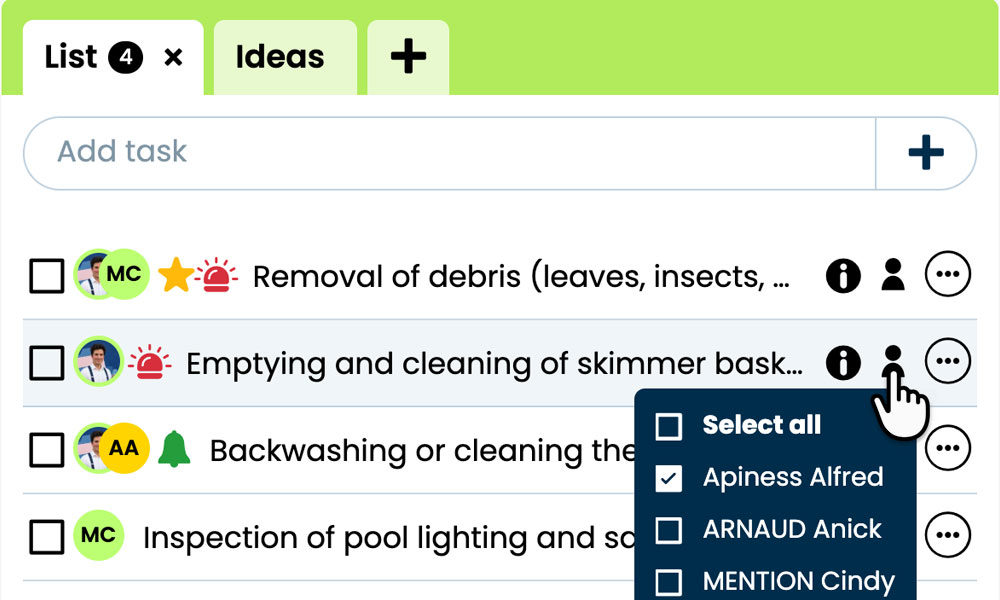
GTD: Organise each project's tasks, notes and files to find the information you need.
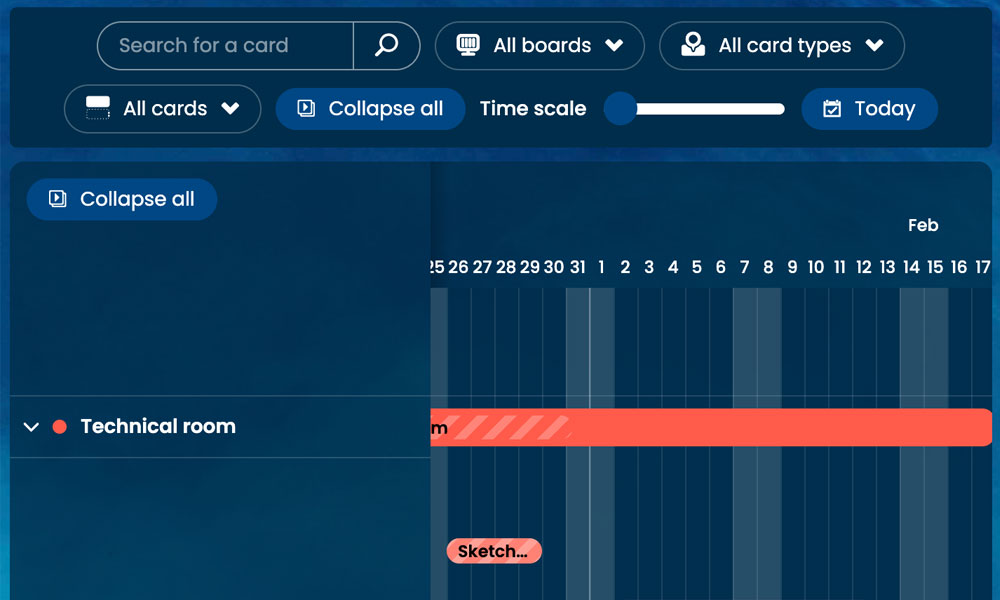
Gantt: View your research phases and their deadlines on a timeline.
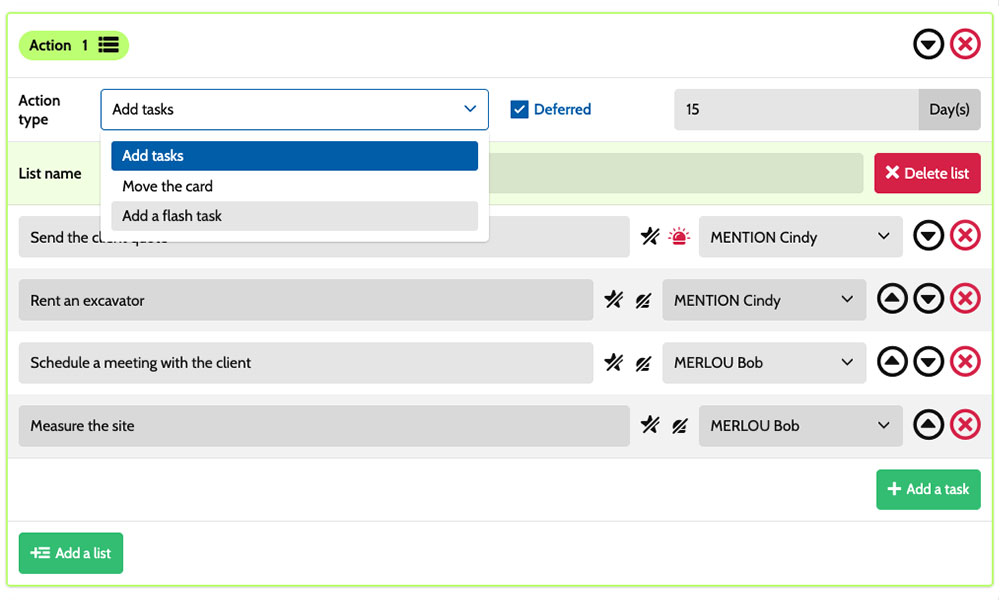
Workflow: Create tasks using automation scenarios tailored to your innovation projects.

Within each card, you set out the actions to take :
formulate hypotheses, prepare tests, analyse measurements or document deployment conditions. Task assignments clarify who is involved, while priorities help focus efforts on key uncertainties. Notes and attachments bring together the observations, protocols and results relevant to the project. You have a shared framework for coordinating researchers, engineers and innovation managers, while retaining the specific requirements of each avenue the team explores.
An example board for tracking your innovation projects
Here is a customisable example setup for a team exploring products, services and technical solutions. Each card represents a project, with its tasks and deadlines. The five columns provide an overview of progress, while the six card types distinguish the different innovation categories. You can adapt their names to your organisation, the role of experimentation in your projects and the way you track results.
Phases that match the way you work
In this example, the Ideas, Research/feasibility, Development and Deployment columns let you visualise project progress. The On hold column keeps paused projects visible while they await test results, available resources or a technical decision.
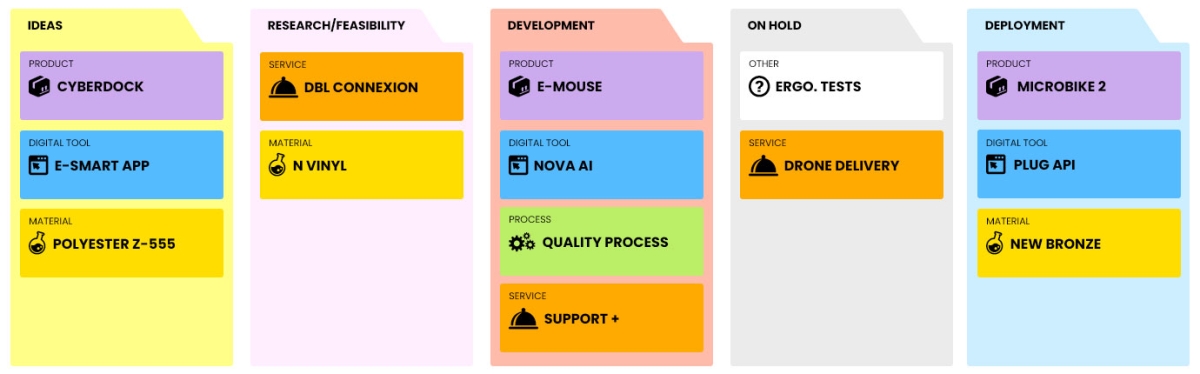
A few examples of project types: define your own!
- Product: designing or improving a physical product to meet user needs.
- Service: developing a new service or improving an existing offering.
- Digital tool : developing applications, platforms or software tools.
- Process: designing or improving a production method.
- Material: developing a material with the required technical properties.
- Other : innovation projects involving other fields or approaches.
Scenarios and workflows:
customise your project automation
1️⃣ The trigger
An autonomous sensor was proposed in Ideas, then investigated in Research/feasibility. After reviewing the initial technical tests, the R&D manager moves its card to Development to prepare a functional prototype and organise its evaluation.
You can configure a scenario that triggers when a Product card enters the Development column. Otilus recognises this combination and creates the predefined tasks. You choose the relevant project types, the triggering phase and the tasks to create automatically, based on your team's working practices and the project's needs.
2️⃣ The actions (workflow)
Otilus automatically creates the tasks defined in the scenario:
- specify the performance requirements
- design the autonomous sensor prototype
- prepare the test protocol
- carry out the tests and record the prototype's results.
These actions are assigned to the selected team members:
the R&D manager for performance requirements, the engineer for the prototype and the technician for testing. You customise the tasks, their assignees and their priorities to match your internal organisation.
3️⃣ The result
The sensor enters development with clearly defined actions and responsibilities. Each team member can view their tasks, protocols and relevant files, then check off completed actions.
The R&D manager can identify outstanding tests and the results still needed before deployment.
The team remains in control of testing and decisions. After reviewing the prototype's results, the manager manually moves the card to Deployment. If a component is missing, they place the project On hold to keep the bottleneck clearly visible on the shared project board.
An approach suited to research and engineering teams
This board can suit an engineering consultancy, an applied research laboratory, an engineering team, a technology transfer centre or an industrial development department. These activities share a need to assess hypotheses, coordinate experiments, document results and make decisions before putting findings into practice. Card types can reflect their research fields or technical specialisms. The phases can be adapted to their exploration and development stages and, depending on the project, the transfer of solutions to users.
Organise your research, experiments and practical applications on a board tailored to innovation.
No credit card required